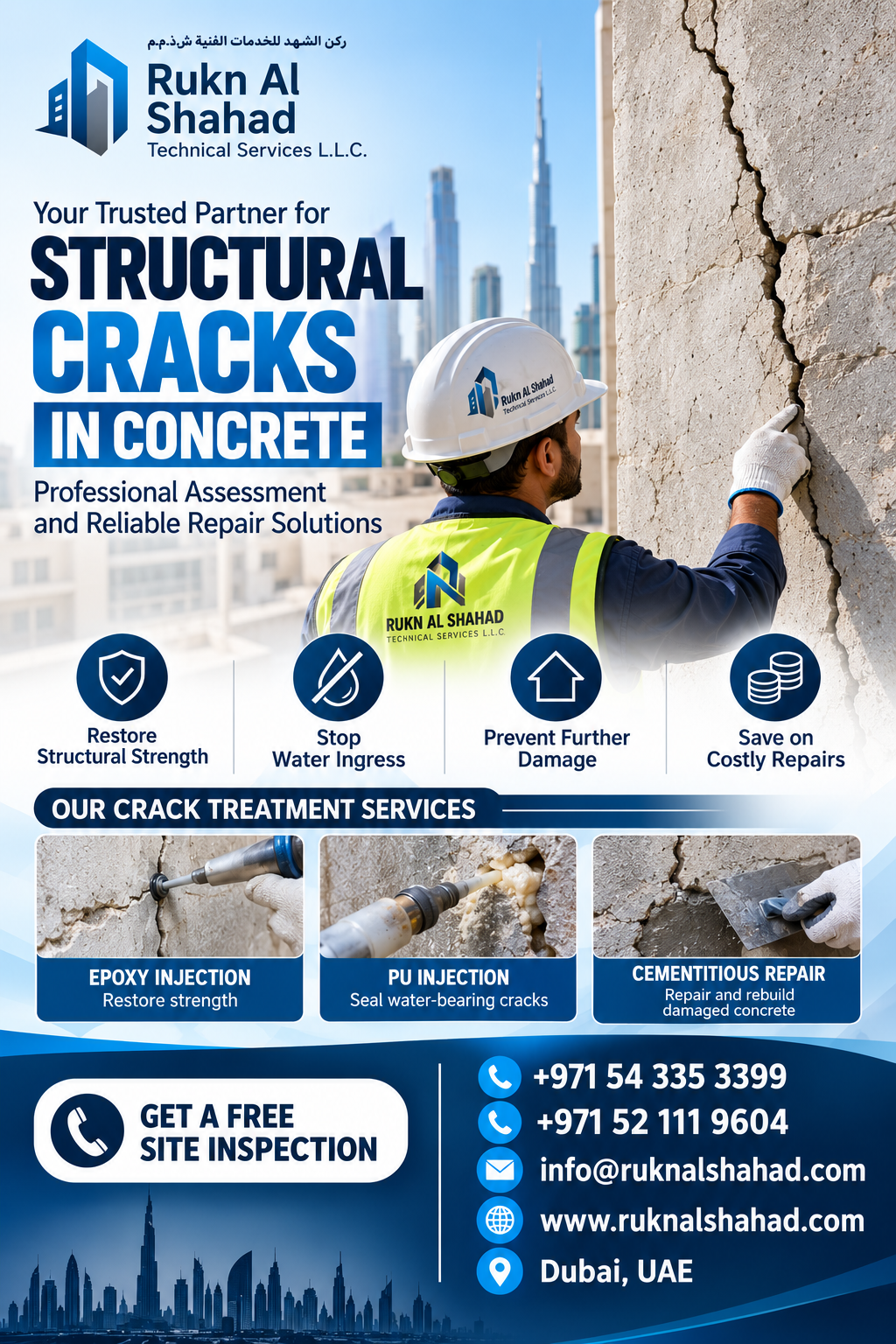
Structural Cracks in Concrete: What They Mean and How to Treat Them
Not every crack in a wall or slab is cause for concern. Concrete cracks to some degree almost everywhere, and plenty of those cracks are harmless. But some cracks are early warning signs of a real structural problem, and knowing the difference is what determines whether you need a quick repair or a much more serious intervention.
Why Concrete Cracks in the First Place
Concrete is strong under compression but relatively weak under tension, which means it’s naturally prone to cracking as it cures, ages, and responds to the forces acting on it. Common causes include:
Shrinkage. As concrete cures, it loses moisture and contracts slightly, which often causes fine surface cracks that aren’t structurally significant.
Thermal movement. Daily heating and cooling, especially pronounced in Dubai’s climate, causes concrete to expand and contract repeatedly over time.
Settlement. If the ground beneath a foundation shifts or settles unevenly, it can put stress on the structure above, leading to cracking.
Overloading. Cracks can develop in beams, slabs, or columns carrying more load than they were designed for.
Corroding reinforcement. When water reaches the steel bars inside concrete, they rust and expand, cracking the concrete around them from the inside out.
Poor construction practices. Incorrect concrete mix, inadequate curing, or insufficient reinforcement can all lead to premature cracking.
Non-Structural vs. Structural Cracks
This is the distinction that actually matters.
Non-structural cracks are typically the result of shrinkage or minor thermal movement. They’re usually:
Hairline thin (less than about 1mm wide)
Not growing over time
Found on the surface only, without affecting structural elements
Vertical or diagonal in a fairly random pattern
Structural cracks are a different matter entirely. Signs that a crack may be structural include:
Width greater than 3mm, or a crack that’s visibly widening over weeks or months
Located in load-bearing elements like beams, columns, or foundation walls
Horizontal cracking in a basement or retaining wall, which can indicate pressure from outside
Cracks accompanied by other signs like doors or windows that no longer close properly, or visible sagging
Stair-step cracking patterns in masonry walls
If you’re seeing any of these signs, it’s worth getting a professional assessment rather than assuming it’s cosmetic.
Why Structural Cracks Need Prompt Attention
A crack that seems small on the surface can already be doing damage you can’t see. Water finding its way through a crack eventually reaches the steel reinforcement inside the concrete. Once that reinforcement starts corroding, it expands, which cracks the surrounding concrete further and weakens the structural element from within. This cycle accelerates over time, turning a manageable repair into a significant structural issue if it’s left alone.
Beyond the structural risk, cracks are also one of the most common paths for water ingress, leading to damp, mould, and damage to finishes throughout the property.
How Structural Cracks Are Treated
The right treatment method depends on the type of crack, its size, and whether it’s still moving.
Epoxy injection is used for structural cracks where strength needs to be restored. Epoxy resin is injected into the crack, where it bonds the concrete back together almost as strongly as the original material. This method works best on cracks that aren’t actively leaking water and aren’t expected to move further.
Polyurethane (PU) injection is the go-to method for active, water-bearing cracks. The polyurethane foam expands on contact with water, sealing the crack even while water is still coming through, and remains flexible enough to handle ongoing minor movement.
Cementitious repair is typically used for larger areas of damage, such as spalled concrete where reinforcement has already started corroding. This involves removing damaged concrete, treating the exposed steel, and rebuilding the surface with repair mortar.
A professional assessment will determine which method, or combination of methods, is right for a given crack.
What the Repair Process Typically Looks Like
TWhile the specific technique varies, most structural crack repairs follow a similar sequence: the crack is assessed to determine its cause and severity, the surface is cleaned and prepared, the appropriate repair material is applied (injected for epoxy and PU methods, or built up in layers for cementitious repair), and the area is inspected once cured to confirm the repair has taken hold properly.
When to Call in an Engineer
Not every crack repair is a job a contractor can complete on their own. If there are signs of significant structural movement, such as walls that are visibly out of plumb, doors and windows that have stopped functioning correctly, or cracks that keep reappearing after repair, it’s worth getting a structural engineer’s assessment before any repair work begins. A reputable crack treatment contractor should flag this possibility rather than treating a structural issue as a simple cosmetic fix.
Choosing the Right Contractor
Since the treatment method depends entirely on correctly diagnosing the crack, it’s worth working with a contractor who:
Assesses the crack in person rather than quoting blind
Explains why they’re recommending epoxy, PU injection, or cementitious repair for your specific situation
Offers a free site inspection
Backs their work with a warranty
Final Thoughts
Most cracks in concrete are nothing to worry about, but the ones that are structural deserve prompt, proper treatment. Left alone, a small crack can lead to reinforcement corrosion, water damage, and repair costs far higher than addressing it early would have been. If you’re unsure whether a crack in your property is cosmetic or structural, getting it assessed is always the safer call.
Rukn Al Shahad provides crack treatment services across Dubai, with free site inspections and warranty-backed repairs. Get your roof assessed before it becomes a bigger problem.
Services We Offer
Residential | Commercial | Office Renovations | Waterproofing | Maintenance | Technical Services in Dubai
At Rukn Al Shahad Technical Services LLC, we focus on identifying root causes, not temporary fixes. Our approach ensures durability, safety, and long-term value for your property.
Book a Free Professional Inspection Today
A free inspection today can prevent lakhs in future repair costs.
